



Crown bracing
Secure instead of felling – preserve trees and sustainably reduce risks
Not every weak point in the tree crown requires felling. Our principle is: whenever possible, a weak point is first mitigated with a targeted reduction prune. By reducing leverage forces, the load on the affected part of the crown can often be lowered to such an extent that technical bracing systems are not required.
Only when the required public safety can no longer be ensured by pruning measures alone, or when this would require a disproportionately severe intervention in the crown, should the installation of crown bracing be considered.
The aim of crown bracing is to secure crown sections at risk of breakage or co-dominant stems with structural weaknesses and to significantly reduce the risk of failure. Depending on the type of damage and the loads involved, dynamic or static bracing systems are used. The crown sections are connected in a tree-friendly, non-injurious manner using modern hollow-rope systems or—in special cases—static steel cable constructions.
As crown bracing is exposed to a natural ageing process as well as weathering, it must be inspected regularly. If you wish, we can create a maintenance plan for your tree stock and remind you in good time of the required functional inspections.
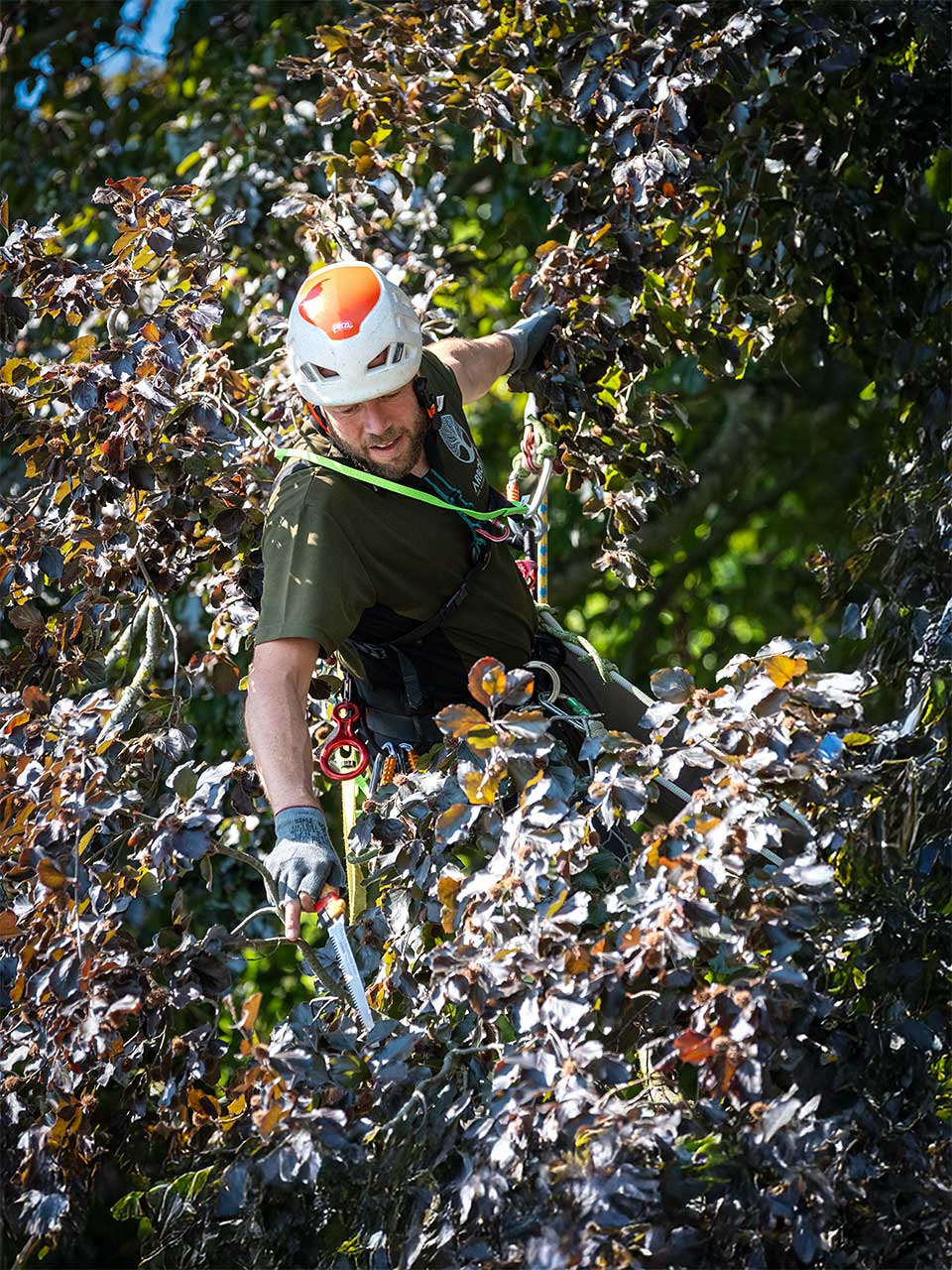
We tailor crown bracing to your needs
Dynamic crown bracing is the most commonly used bracing system. At-risk crown sections are connected with a special hollow rope that is individually adapted to the specific installation situation.
The key advantage of this system is that the tree crown’s natural movement is preserved. The bracing is deliberately installed with a certain amount of slack and only engages under increased loads, for example during a storm. This reduces dangerous peak stresses while allowing the tree to continue moving freely under normal conditions.
From a tree biology perspective, this residual movement is desirable. The tree detects the mechanical load and can improve its stability over the long term by forming reaction wood. Crown bracing therefore supports the tree’s natural ability to adapt rather than preventing it.
Depending on the crown structure, several co-dominant stems within a crown can also be connected to one another. The service life of dynamic crown bracing depends on the system used and the manufacturer’s specifications. Regular inspections are required throughout the entire service life.
Static crown bracing is used when a crack is already present or when splitting must be expected due to existing co-dominant unions or branch attachments.
Unlike dynamic systems, static crown bracing has virtually no stretch and is tightened using tensioning devices. It prevents movement in the area of the weak point and permanently stabilises the damaged connection.
In most cases, static crown bracing is combined with an overlying dynamic crown bracing. While the static bracing secures the existing crack and prevents further splitting, the dynamic bracing limits peak loads occurring in wind and relieves the damaged fork.
Every tree has different structural and biological conditions. For this reason, the appropriate bracing system is always planned on an individual basis. In addition to classic crown bracing, combined systems, guying or other structural solutions may also be appropriate, depending on the situation.
Our goal is to ensure public safety with the most gentle measures possible while preserving as much healthy tree substance as possible over the long term.
Additional tree care services
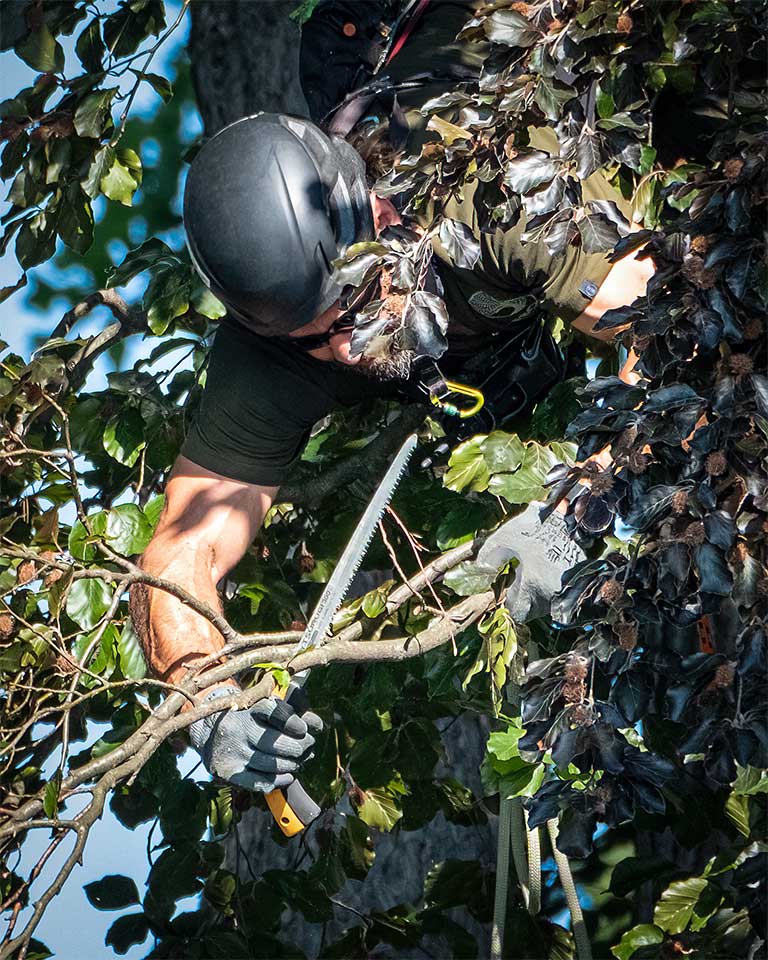
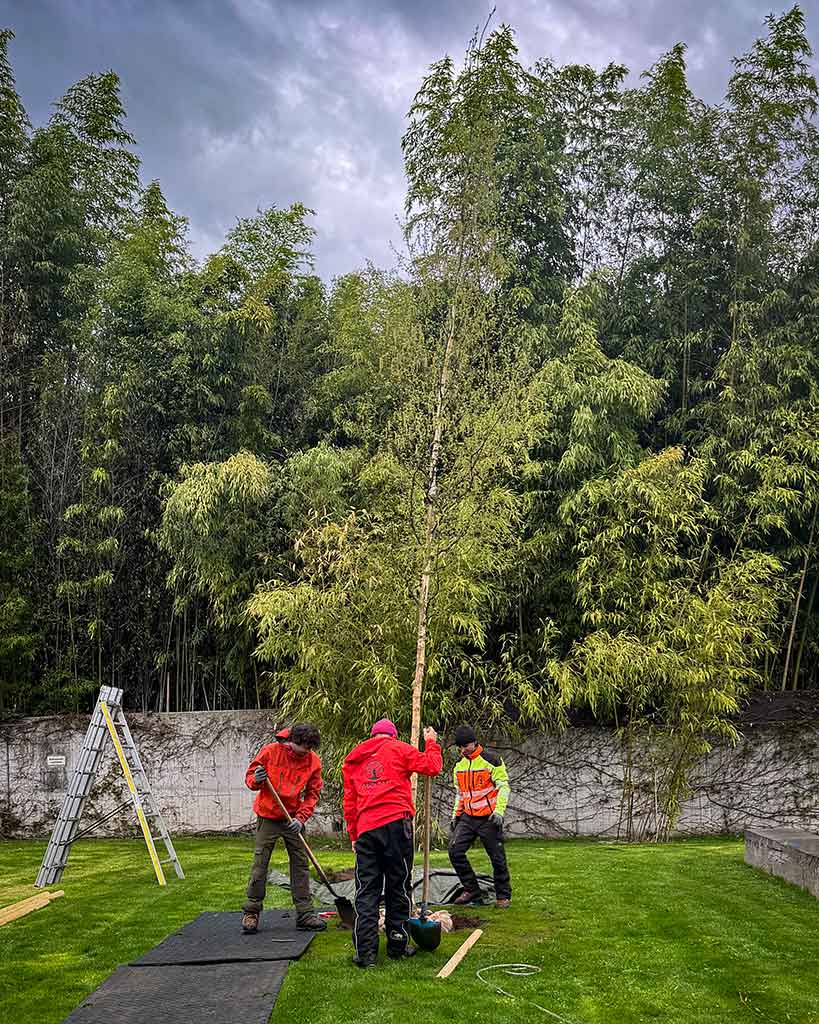
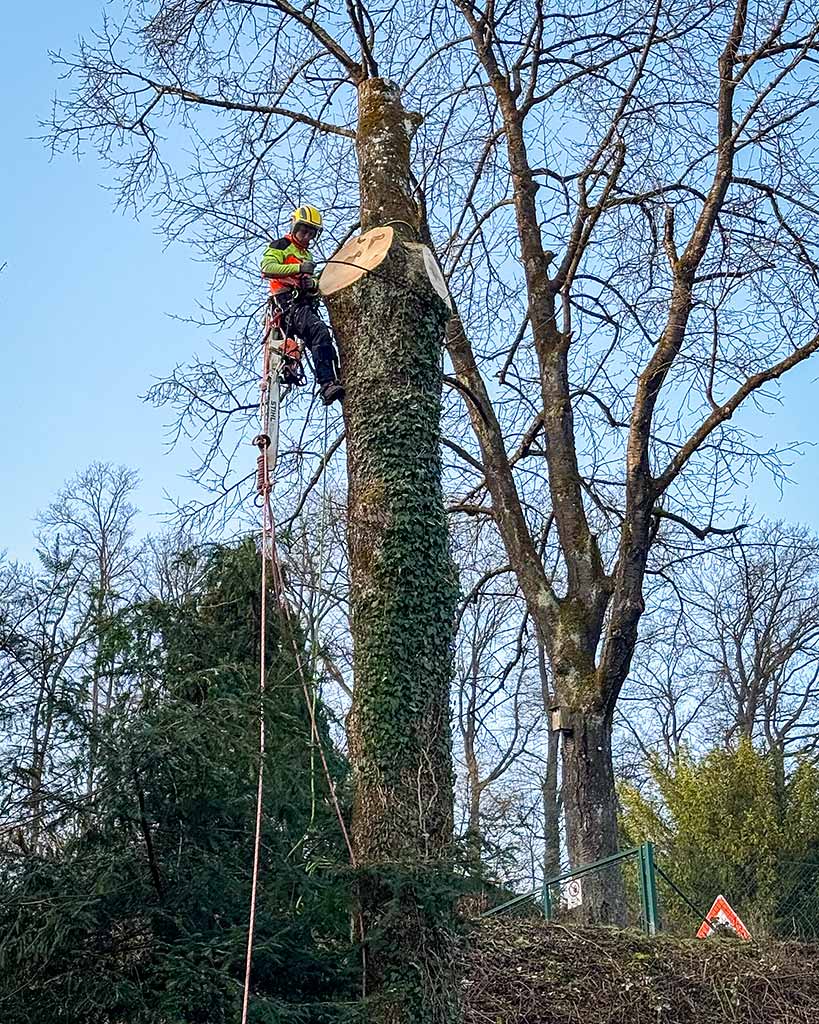
As tree care specialists, we have the right solution for every tree
We would be pleased to clarify which specific measures are suitable for your trees during a personal consultation.