

Tree pruning
When is tree pruning necessary?
In nature, trees thrive even without human care. It is our expectations of the tree that make tree care necessary. In urban areas, trees have to meet a wide range of requirements: from road safety and the desired shape, size and light permeability to achieving the best possible yield from fruit trees.
The right pruning measure at the right time is crucial to achieving these goals. However, very few people have the specialist knowledge required to correctly assess a tree’s condition and determine the appropriate pruning measures.
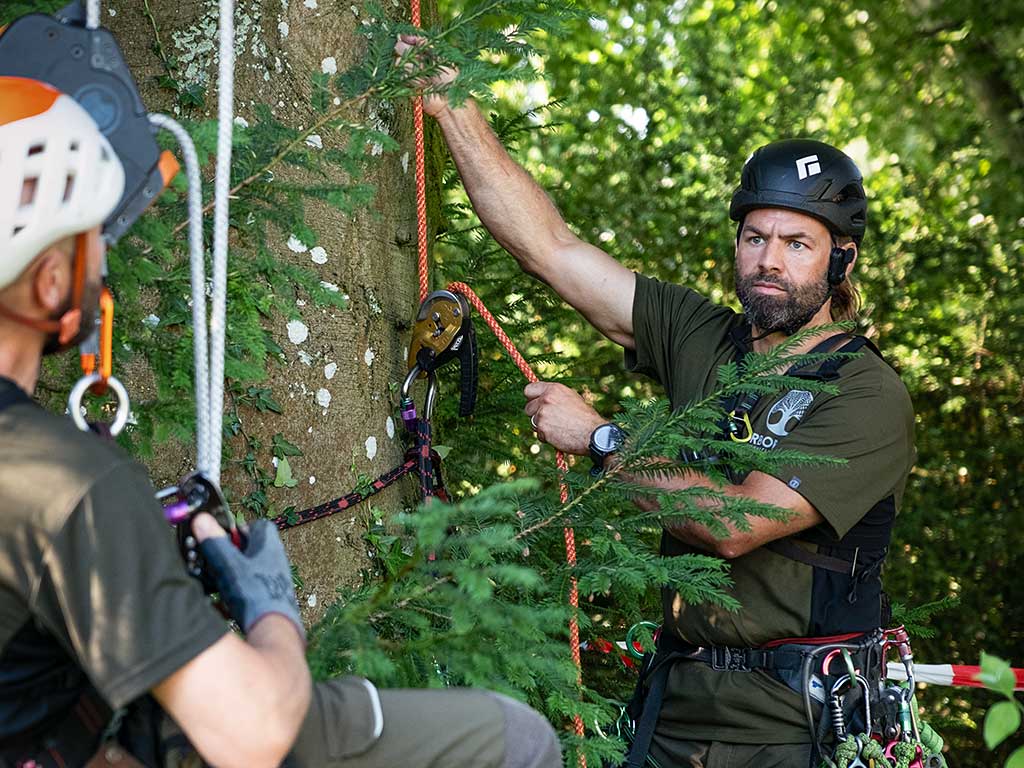
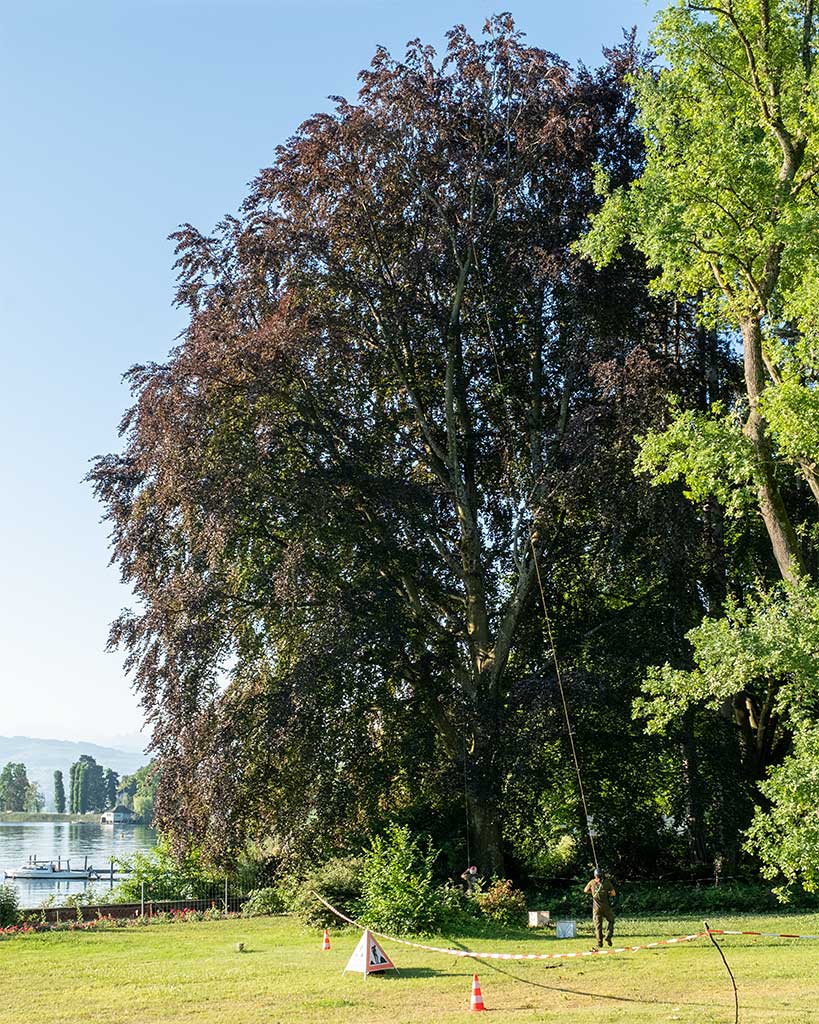
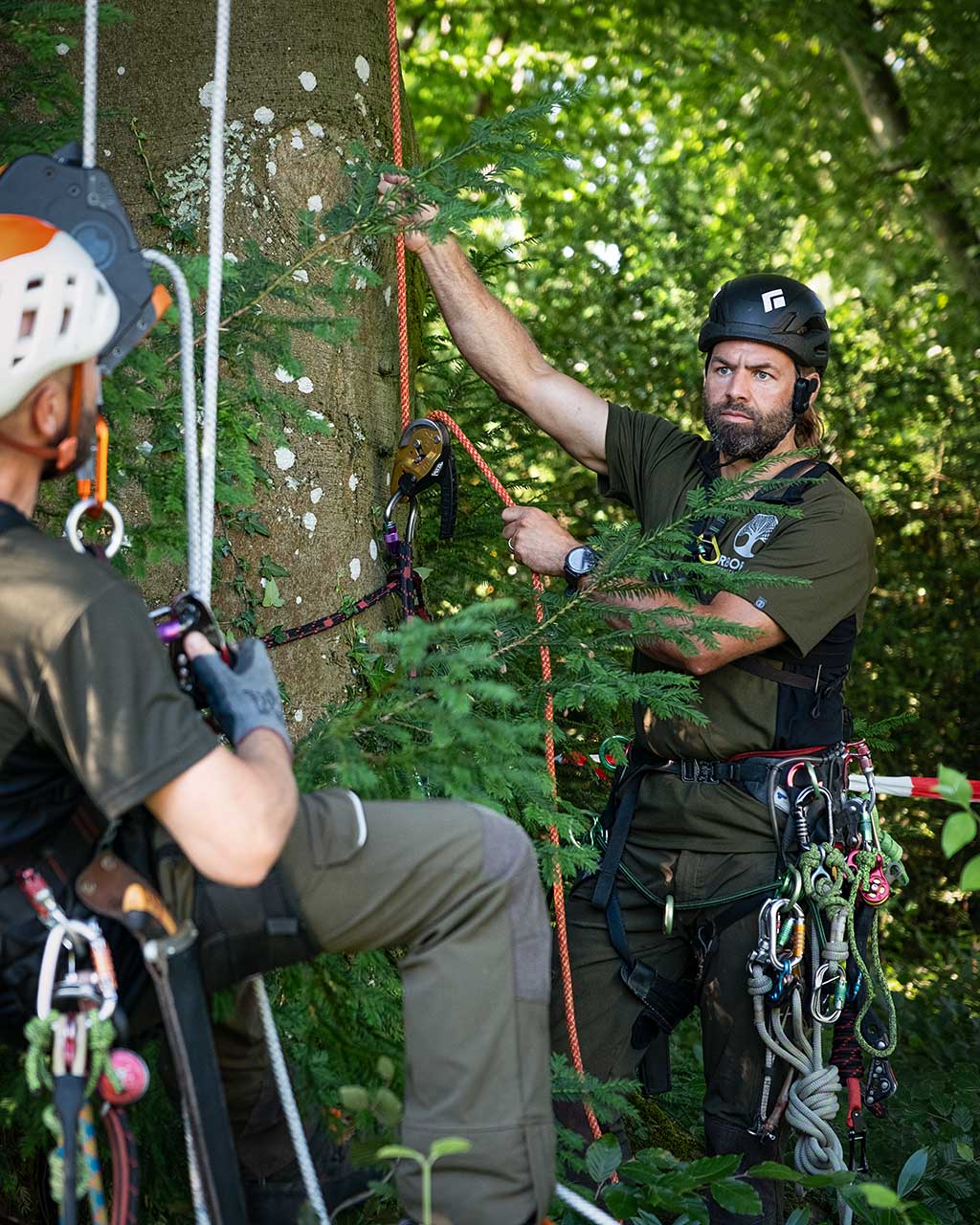
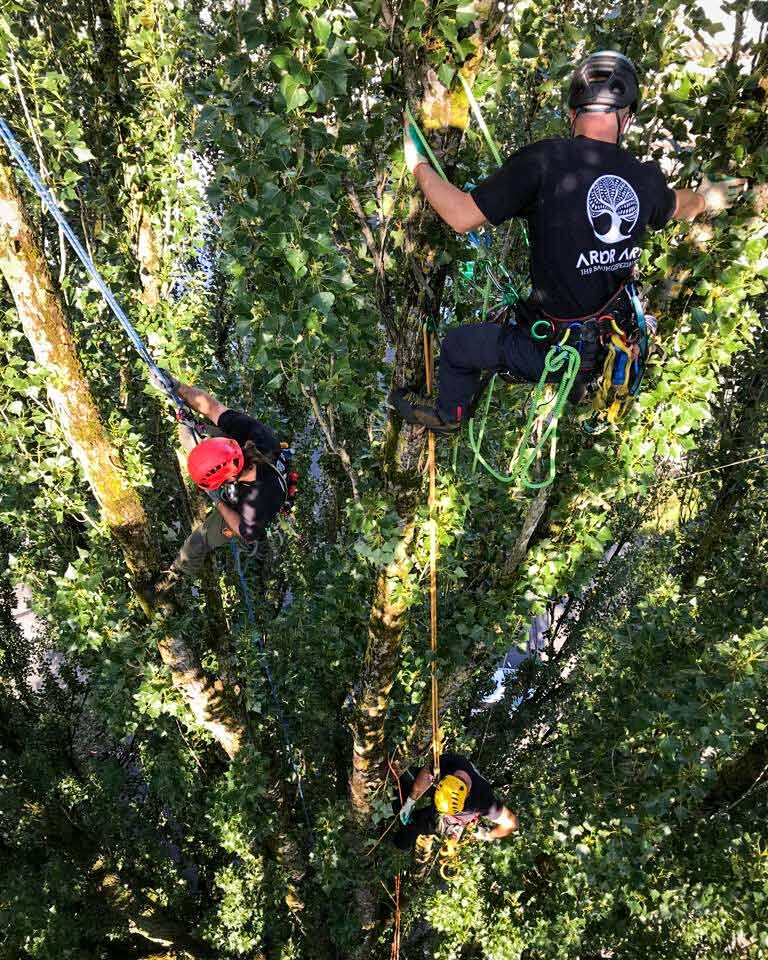
This is where we come in. Using modern rope access techniques, we can care for trees of any size professionally, efficiently and in a tree-friendly manner. Our aim is to preserve the tree for as long as possible and to reconcile its natural development with the requirements of its location. Professional tree care helps to extend a tree’s life expectancy, preserve its ecological value, and avoid costly interventions or felling wherever possible.
However, we do not carry out topping cuts or other measures that cause lasting damage to the tree.
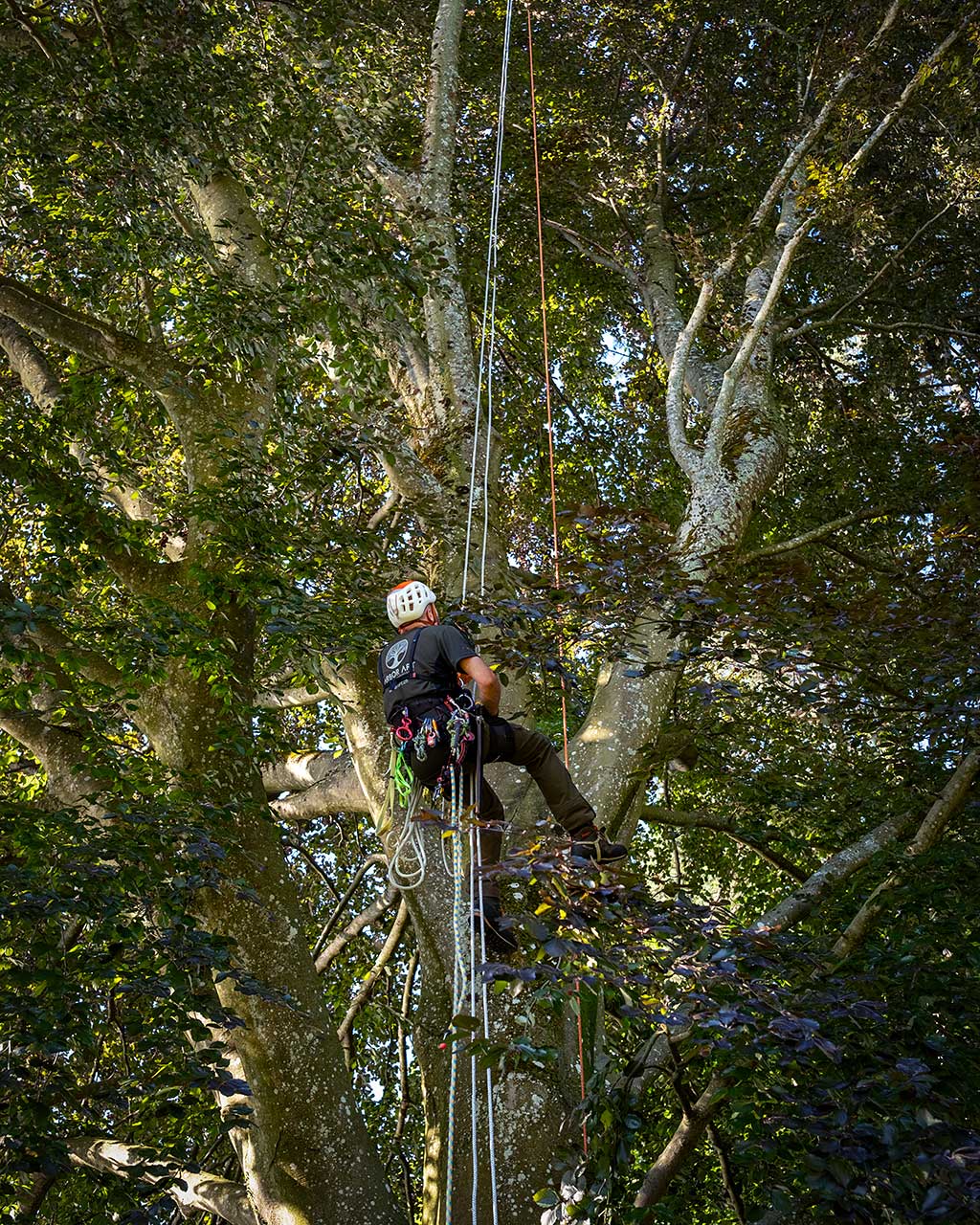
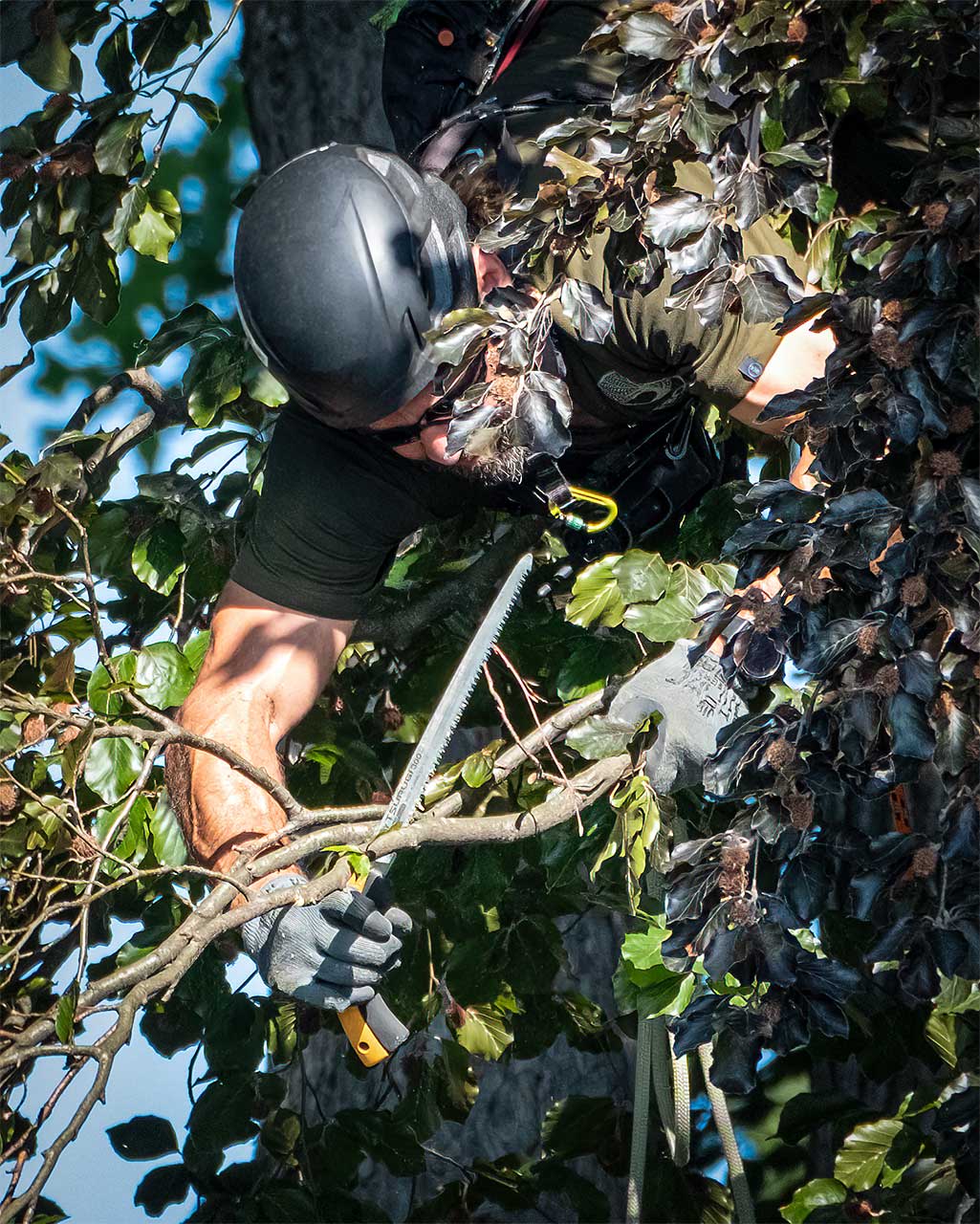
We regularly carry out the following types of pruning as part of tree care.
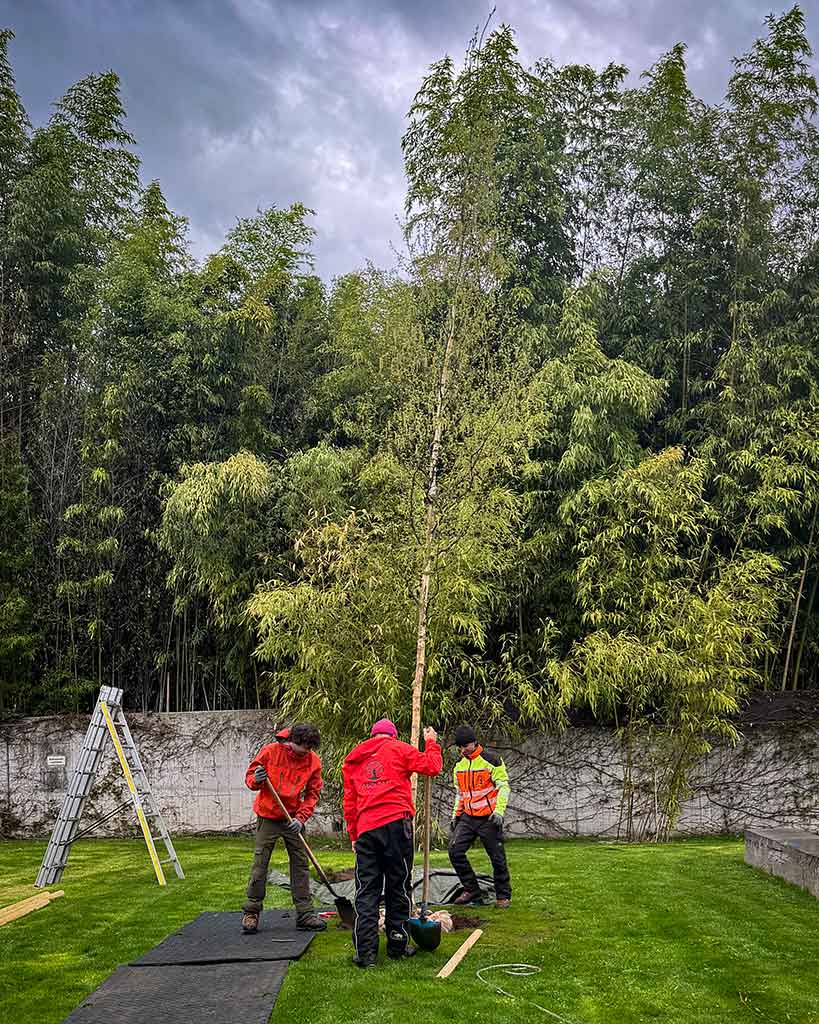
The earlier trees are pruned, the easier and more precise the care measures can be carried out. Formative pruning is so called because, in the first years after planting, it ensures that the young tree develops an attractive growth form. Potential problem areas are removed early so that a stable, evenly developed crown can form.
We usually carry out this type of pruning once the tree has fully established. This is the case around two to three years after planting. Whenever possible, formative pruning should be carried out during the growing season. Formative pruning promotes the leader and scaffold branches by, for example, removing branches that are poorly attached to the trunk. Dominant lateral growth is subordinated (for uniformity) and the clearance profile is established. A clearance profile is essential, especially for trees growing near roads.
If formative pruning has been missed or carried out inadequately, trees may subsequently develop an unattractive, unstable form or one that is unsuitable for their location. Corrective pruning can remedy undesirable developments in the crown. The aim of corrective pruning is essentially the same as with formative pruning. However, this type of pruning is also carried out on mature trees.
Clearance pruning is one of the most important pruning measures for trees near roads and above sidewalks. Under road traffic legislation, a clearance of 4.5 m above the road and 2.5 m above the sidewalk is required. However, we recommend establishing the clearance profile at 5 m above the road and 3 m above the sidewalk. The reason: as trees age, branches always droop slightly. This ensures that a normal pruning interval of around 4–6 years can be maintained. Ideally, clearance pruning is carried out as early as possible in a tree’s life so that the resulting wounds are as small as possible.
In a private garden, it can be useful to establish a clearance profile to improve access and make maintenance work such as lawn mowing easier.
The aim of crown maintenance is safety and tree preservation. Dying, dead, diseased, rubbing and damaged branches and twigs are removed. Poor developments in the fine-branch structure are corrected. Heavy branches and crown sections at risk of breaking are relieved and, if necessary, secured with crown bracing. As part of this pruning measure, the clearance profile is also established or maintained. Another component of this care measure is a visual tree inspection—we check every fork and branch attachment for weak points.
Crown reduction pruning is used when your trees must not grow any larger on one or more sides. This is the case near buildings, for example, when the central leader may continue to grow upwards but the tree should not grow any wider. To keep the cut surfaces as small as possible when limiting branches, pruning should begin early and be repeated at regular intervals. Depending on the tree species, this is necessary every one to six years. This allows growth to be adjusted so that the tree meets the location-specific requirements.
If trees lose parts of their crown due to storms, snow breakage or severe topping, they usually respond with vigorous growth. To ensure that a species-typical, natural form develops again and is adapted to the site, we prune twigs and branches at short intervals. This helps to rebuild the tree’s natural crown shape.
Especially in older fruit trees, it is often observed that they hardly produce any new shoots and only bear small fruit in the upper part of the crown. Targeted rejuvenation pruning and reduction pruning can stimulate the formation of new branches and encourage flowering in fruit trees. In addition, thinning the crown allows more light to reach the lower parts of the tree. This also helps to promote blossom and fruit and achieve a more abundant harvest.
Important: fruit trees should be pruned in winter. Pruning after bud break in spring can damage the future fruit. In winter, by contrast, the blossoms are protected inside their buds and are not damaged.
Additional tree care services
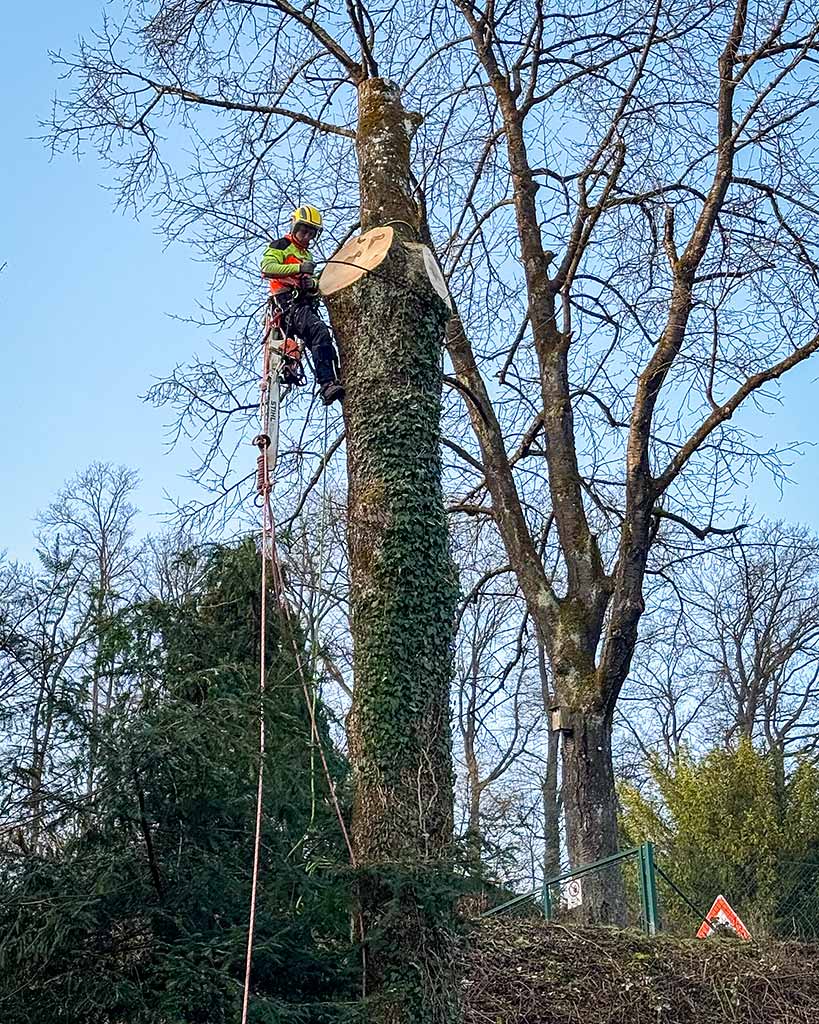
As tree care specialists, we have the right solution for every tree
We would be pleased to clarify which specific measures are suitable for your trees during a personal consultation.